
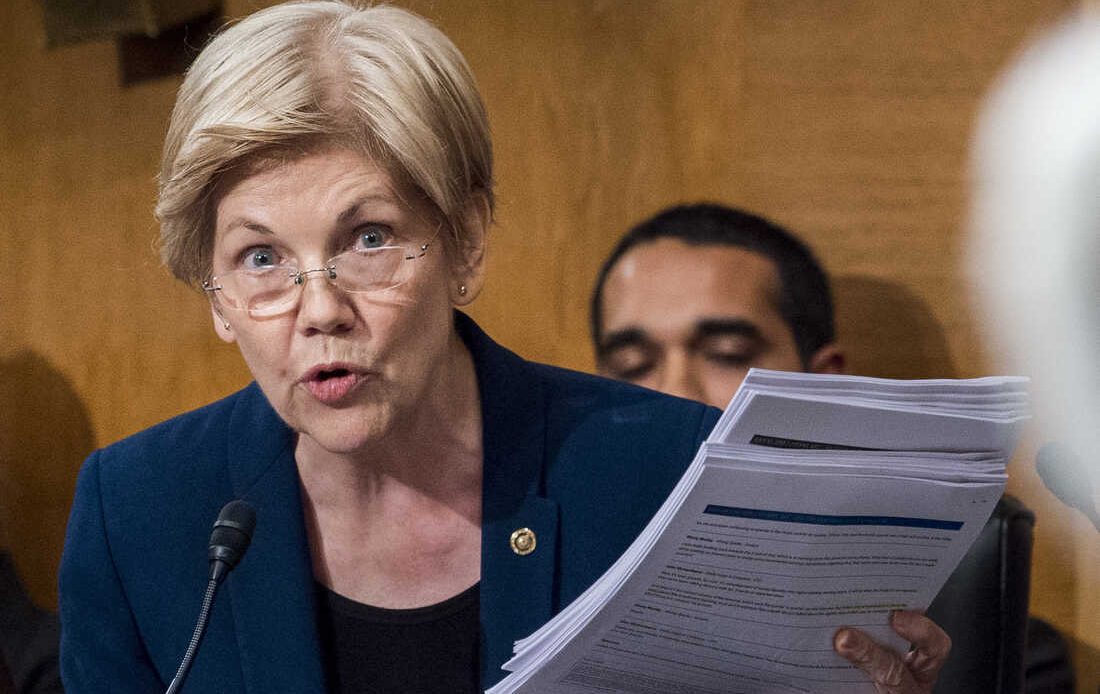
Why Is the Digital Chamber Challenging Warren’s Letter?
The Digital Chamber rejected Sen. Elizabeth Warren’s claim that crypto firms were improperly granted national trust charter approvals, escalating a policy fight over how digital asset companies should fit inside the U.S. banking system.
The industry group, which represents more than 250 crypto-related entities, sent a letter Tuesday to the Comptroller of the Currency arguing that Warren misread the National Bank Act and the Office of the Comptroller of the Currency’s authority to approve national trust banks.
Warren had sent a letter last week saying several recently granted approvals involving Ripple, Circle, Paxos, Fidelity, BitGo, and Coinbase violated the National Bank Act. She argued that the firms were not being held to the same standards as traditional banks under a law that has long defined the framework for nationally chartered banks.
The Digital Chamber rejected that view. “The characterization of these approvals as ‘apparent violations’ of the National Bank Act misreads both the statute and the OCC’s longstanding charter authority,” CEO Cody Carbone said in the letter.
What Is at Stake in the Trust Charter Fight?
The dispute centers on whether crypto firms should be allowed to operate as federally regulated trust banks without becoming full-service commercial banks. Several digital asset companies have sought OCC approval for that structure as they try to bring custody, stablecoin, and settlement activity under federal supervision.
The distinction is important. If Ripple, Circle, BitGo, Fidelity Digital Assets, and Paxos receive final approvals, they would be able to hold customer assets. They would not be allowed to accept cash deposits or make loans. That places them outside the traditional bank model while still bringing them under a federal charter.
For crypto firms, national trust charters could reduce the burden of navigating state-by-state licensing and give institutional clients a clearer regulatory framework. For critics, the concern is that crypto companies may gain the credibility of federal banking oversight without carrying the same obligations as traditional banks.
The fight also lands as traditional finance and crypto firms are already clashing over bank charter access, stablecoin rules, and the treatment of rewards tied to digital asset products. The charter issue has become another test of whether U.S. regulators will integrate crypto firms into existing bank frameworks or keep them at the edge of the financial system.
Investor Takeaway
The OCC charter fight is about market access. Federal trust approval could make crypto firms more attractive to institutional clients, but political resistance means approvals may remain exposed to legal, supervisory, and congressional pressure.
How Does the Stablecoin Law Fit Into the Dispute?
Warren argued that companies seeking federal charters appear to have organized themselves in response to the GENIUS Act, the stablecoin law passed last summer. She said the new law does not change the National Bank Act or give crypto firms a separate path around traditional banking requirements.
The Digital Chamber’s response was that the stablecoin law strengthens the case for OCC action rather than weakening it. Carbone argued that Congress created a new category of federally regulated stablecoin issuer and that it would make little sense for the OCC to avoid using its charter authority while that framework develops.
“It would be deeply incongruous for Congress, on an overwhelmingly bipartisan basis, to establish a new category of federally regulated stablecoin issuer while the OCC stood by and declined to exercise its chartering authority,” Carbone said.
That argument links the charter debate directly to stablecoin regulation. If stablecoin issuers are expected to operate under federal rules, the industry wants a banking-style supervisory structure that can support custody, reserves, payments, and institutional settlement. Warren’s position suggests that federal oversight should not come through approvals she views as inconsistent with the National Bank Act.
What Are the Implications for Crypto Firms?
For firms such as Circle, Paxos, Ripple, BitGo, Fidelity Digital Assets, and Coinbase, the outcome could affect how quickly they expand regulated custody and stablecoin-related services in the U.S. A final OCC approval would give them a clearer federal operating model and could help them compete with banks for institutional crypto business.
The political risk is that trust charters become a proxy battle over the broader direction of U.S. crypto policy. If lawmakers hostile to the approvals increase pressure, the OCC may face demands for stricter conditions, longer review periods, or new limits on what crypto trust banks can do.
For traditional banks, the dispute is also strategic. Federally chartered crypto trust banks could compete in custody, tokenized settlement, and stablecoin infrastructure without carrying the same lending and deposit-taking profile as commercial banks. That could create pressure on banks to expand their own digital asset services or push for a narrower interpretation of OCC authority.
The current fight does not settle the legal question. It shows that crypto’s move into federally supervised financial infrastructure is no longer only a regulatory matter. It is now part of a wider political contest over who gets access to bank-like status, how stablecoin issuers should be supervised, and whether digital asset firms can enter core financial markets without being treated as traditional banks.