
From Coronation Chicken to the Senate: The Making of Abdul El-Sayed
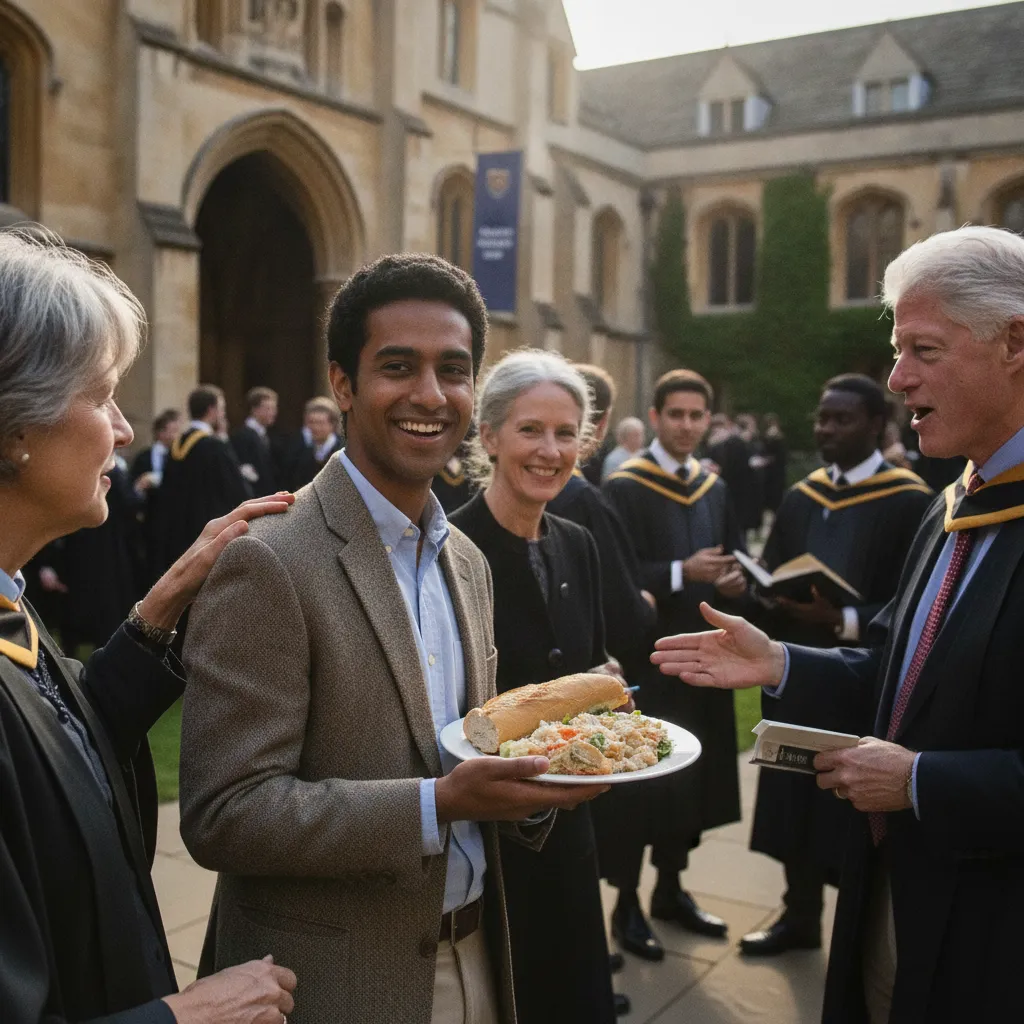
Long before he became history’s first Muslim senator, Abdul El-Sayed was a standout figure at the University of Oxford, arriving in 2009 as a Rhodes Scholar with a reputation for brilliance already established in America. At the University of Michigan, he had been hailed by President Mary Sue Coleman as the epitome of the engaged intellect, earning high praise from figures like Bill Clinton. While his academic journey began with some turbulence—including an early flight back to Michigan during his first term—El-Sayed eventually found his rhythm in England, blending rigorous doctoral research with a vibrant social and athletic life.
On the sports field, El-Sayed distinguished himself as a defensive master and captain of the Oxford lacrosse team. Former teammate Elias Rothblatt recalls him as a fierce competitor who managed to balance leadership and discipline with a genuine sense of humor. This approachable side extended beyond athletics; El-Sayed developed a famous fondness for a specific coronation chicken ciabatta at a local cafe in Oxford’s covered market. The bond between the student and the shop owner, Ricardo Chasebi, grew so strong that the custom sandwich was officially named The Abdul on the menu, and El-Sayed even credited Chasebi in his doctoral thesis for nourishing both his stomach and soul.
Beyond the campus landmarks and cafes, Oxford served as a catalyst for El-Sayed’s political evolution. Through writing for The Guardian and observing British governance firsthand, he developed a deep admiration for the UK’s parliamentary system. He was particularly moved by seeing diverse representation in East London elections, noting that such demographic reflection felt nearly impossible for an Arab American in the United States at that time. These observations helped shape his vision of inclusive leadership long before he entered politics himself.
Now entering the Senate, El-Sayed carries with him the lessons learned from those formative years across the Atlantic. Those who knew him then describe an ambitious young man with clear goals and big ideas about how to impact the world. As he transitions from a celebrated student athlete and scholar to a national legislator, his peers believe he is simply bringing to fruition the potential they saw decades ago in the classrooms and playing fields of Oxford.
Related Stories
Silence Broken at the Ballot Box as Abuse Survivors Become a New Political Force
For many survivors of sexual violence, politics often feels like a space where their traumas are either ignored…

Beyond the Ballot Box: Unpacking the Economic Engine of Populism
The recent shifts in American electoral dynamics have sparked a necessary debate about what actually drives voters toward…

From Combat to Campaigning: Florida’s Warrior Lieutenant Governor Calls for GOP Resilience
Jay Collins is not a man who shies away from a crisis. As a former Green Beret, he…

Breaking the Glass Ceiling Across Tribal Lands and State Lines
Crystalyne Curley first discovered her passion for politics during a third grade field trip to the Navajo Nation…