
Why Is the Bank of England Defending Its CBDC Process?
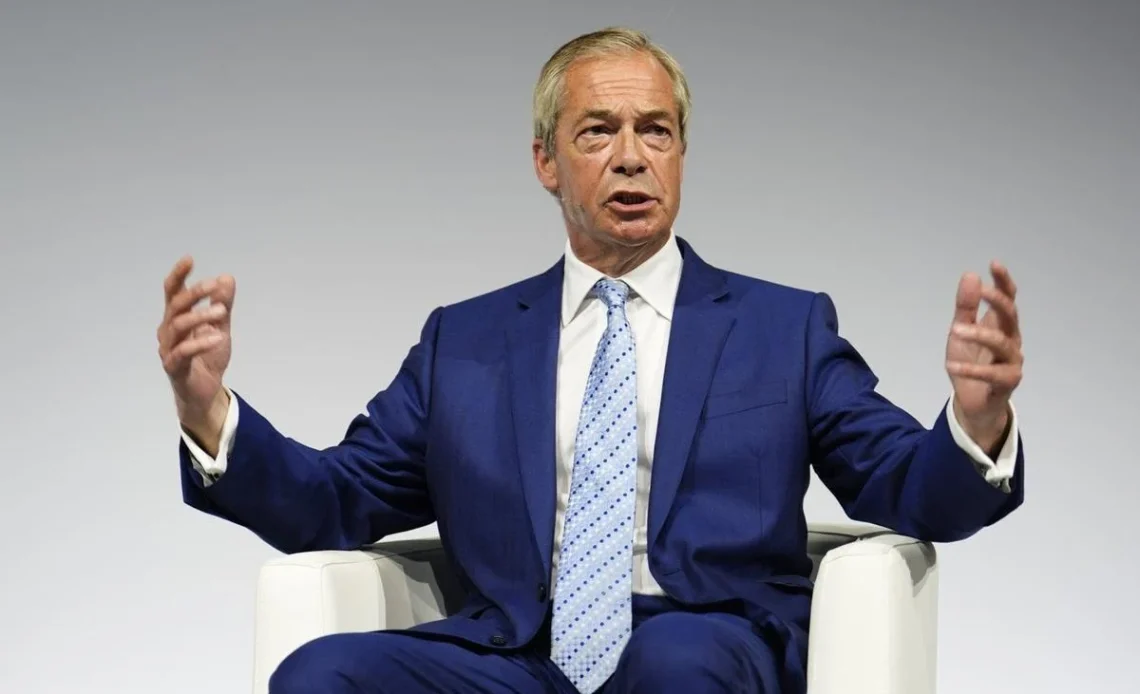
Bank of England Governor Andrew Bailey has denied that lobbying by Nigel Farage influenced the central bank’s approach to a potential central bank digital currency, saying no policy changes were made as a result of Farage’s intervention.
The statement came after Bailey met Farage to discuss several topics, including cryptocurrencies. The meeting drew attention because Farage has been one of the most vocal political critics of central bank digital currencies in the UK, framing the proposed digital pound as a risk to financial privacy and personal freedom.
Bailey said the central bank is “able to spot” attempts to influence its policymaking and made clear that its work on the digital pound remains independent. “Following our meeting, Mr. Farage spoke with the press outlining that we had discussed a range of topics, including cryptocurrencies,” Bailey wrote. “I am happy to confirm that no policy changes have taken place as a result of interventions by Mr. Farage.”
The denial matters because CBDC policy sits at the intersection of monetary infrastructure, privacy concerns, payment innovation, and political trust. Any perception that central bank decisions are being shaped by party pressure or crypto-linked lobbying could weaken public confidence in the review process before a final decision has been made.
Why Has Farage Become Central to the CBDC Debate?
Farage, the leader of Reform UK and a prominent Brexit campaigner, has built a public case against CBDCs by arguing that they could enable financial surveillance. He has said he would “rather go to prison” than live under such a system.
His role in the debate has become more sensitive after reports that he accepted “gifts” from individuals with ties to the crypto industry. Farage resigned his parliamentary seat this week but denied wrongdoing, saying during an X livestream that he has “not broken the law in any way at all.”
The political backdrop adds risk to the Bank of England’s digital pound work. CBDCs are already difficult to sell to the public because they require trust in how transaction data would be handled, how access would be controlled, and whether government agencies could use the system beyond its stated purpose.
For crypto firms and privacy campaigners, the debate creates an opportunity to push back against state-backed digital money. For policymakers, it creates a communications problem: the digital pound must be presented as payment infrastructure, not as a surveillance tool or a response to political pressure.
Investor Takeaway
The Bank of England’s message is aimed at protecting the credibility of the CBDC review process. For investors, the key issue is not whether the digital pound is imminent, but whether political pressure can slow, reshape, or complicate future UK payments regulation.
What Is the Status of the Digital Pound?
The Bank of England is still researching a potential digital pound, but no final decision has been made. The project remains in the design phase as officials assess whether a CBDC is needed in an economy where digital payments, stablecoins, tokenized assets, and private-sector money are expanding.
“No decision has been made on whether to introduce a digital pound,” the central bank said in a recent update, adding that any launch would require further analysis and public consultation.
That position gives the Bank room to continue technical work without committing to issuance. It also allows policymakers to address the central concerns around privacy, access, commercial bank deposits, financial stability, and the role of central bank money in retail payments.
The distinction between research and launch is important. Central banks globally are exploring CBDCs because cash usage is declining in many markets and private digital payment systems are gaining influence. But moving from research to issuance requires political consent, operational readiness, and a legal framework that can withstand public scrutiny.
How Does Tokenization Fit Into the UK’s Policy Direction?
The Bank of England is also testing how tokenized assets could be settled using central bank money. Earlier this year, it launched a 6-month pilot involving 18 companies as part of a broader effort to modernize UK financial infrastructure.
That work is separate from a retail digital pound but linked to the same policy question: how central bank money should function in markets where assets, deposits, and payment rails are becoming more digital. Settlement using central bank money could reduce counterparty risk in tokenized markets and support institutional adoption if the framework is clear.
For banks, asset managers, payment firms, and crypto companies, the UK’s direction remains cautiously constructive. The central bank is not abandoning digital money research, but it is also not moving toward a rushed CBDC launch. That measured approach may help limit political backlash while keeping the UK involved in tokenization and next-generation settlement experiments.
The Farage episode shows that CBDC policy is no longer only a technical matter. It has become a political test of trust in financial institutions. Bailey’s denial is therefore less about one meeting and more about protecting the Bank of England’s ability to make digital money policy without appearing exposed to outside pressure.