
Morning brief: Oil surges toward $120, Asian markets tumble

Global financial markets opened the week under heavy pressure as the escalating conflict in the Middle East triggered a sharp surge in oil prices and rattled investor confidence worldwide.
Asian equities fell steeply, the US dollar strengthened as investors sought liquidity, and cryptocurrencies retreated amid a broader risk-off mood.
The closure of the Strait of Hormuz and production disruptions across the Gulf pushed crude prices sharply higher, raising fears of renewed inflation pressures and a potential slowdown in global growth.
At the same time, political developments surrounding the war, including comments from US President Donald Trump, continued to shape the geopolitical outlook.
Asian markets slide as oil shock fuels inflation fears
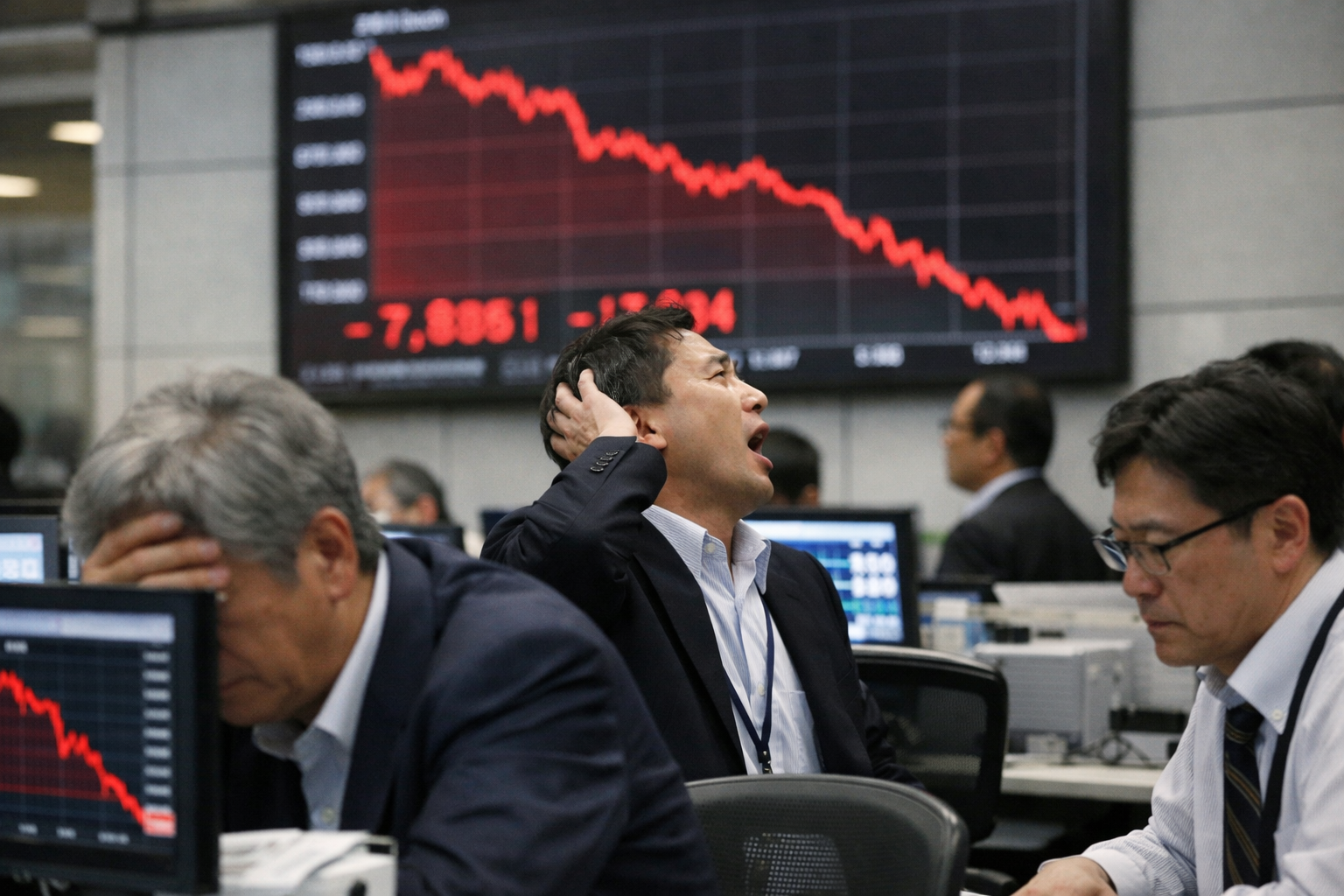
Asian equities fell sharply on Monday as investors reacted to the surge in energy prices and the risk of prolonged geopolitical instability.
Japan’s Nikkei dropped 6.8% after already losing 5.5% the previous week, reflecting the country’s vulnerability as a major importer of oil and gas.
South Korea’s Kospi fell as much as 8%, extending losses of more than 10% recorded the previous week.
China’s blue-chip CSI 300 index declined 1.6%.
The country, while also a major oil importer, holds large crude reserves that could partially cushion the immediate impact.
Analysts warned that the surge in energy prices could have broader economic consequences.
"The global economy remains dependent on the concentrated flow of Mideast oil and natural gas through the Strait of Hormuz," said Bruce Kasman, chief economist at JPMorgan.
"The near-term scenario is a near-term spike towards $120 bbl followed by moderation as the conflict soon subsides," he added. "But absent a clear and decisive political resolution, Brent crude oil prices are expected to settle at an elevated $80 bbl through mid-year."
Kasman said such a scenario could reduce global economic growth by about 0.6% in the first half of the year and push consumer prices higher by roughly 1%.
Bitcoin declines as investors turn defensive
Cryptocurrency markets also reflected the cautious mood.
Bitcoin fell to its lowest level in about a week during early Asian trading, dropping as much as 2.36% to $65,633 before stabilizing above $67,000 later in the session.
Analysts said rising oil prices and inflation fears were contributing to the risk-off sentiment.
Exchange-traded fund flows have also turned negative in recent months.
US-listed spot Bitcoin ETFs have recorded nearly $6 billion in net outflows since November, according to data compiled by Bloomberg.
Oil surge intensifies global market tensions
Oil prices surged dramatically as the war disrupted production and shipping routes across the Middle East.
Brent crude jumped as much as 29% to $119.50 per barrel at one point, marking the largest intraday move since April 2020.
At the time of writing, Brent was trading around $115.99.
West Texas Intermediate crude rose about 26% to above $115 per barrel.
The rally reflects growing concerns over supply disruptions after tanker traffic through the Strait of Hormuz effectively halted.
The narrow waterway normally handles roughly one-fifth of global oil shipments.
Major producers have begun cutting output as storage fills due to blocked export routes.
Kuwait has reduced production and refinery operations, while the United Arab Emirates has also trimmed offshore output.
Iraq has seen an even sharper impact.
Production from its three main southern oilfields has fallen about 70% to roughly 1.3 million barrels per day from about 4.3 million barrels per day before the conflict.
Analysts warn the situation could worsen if export bottlenecks persist, with JPMorgan estimating that Middle East production shut-ins could exceed 4 million barrels per day in the coming weeks.
Trump signals joint decision with Netanyahu on Iran war timeline
Political developments surrounding the conflict continue to influence market sentiment.
US President Donald Trump said a decision on when to end the war with Iran would be made jointly with Israeli Prime Minister Benjamin Netanyahu.
“I think it’s mutual… a little bit. We’ve been talking. I’ll make a decision at the right time, but everything’s going to be taken into account,” Trump said.
Trump also defended the economic impact of rising oil prices, describing them as a temporary cost of the conflict.
A gain in “short term oil prices” was a “very small price to pay” for destroying Iran’s nuclear threat, Trump said, adding that prices will fall rapidly “when the destruction of the Iran nuclear threat is over.”
He also praised Netanyahu’s leadership during the war.
“Bibi’s done a great job. He’s been a wartime prime minister. We’ve worked together. We’ve destroyed a country that wanted to destroy Israel. Would have destroyed Israel if I wasn’t around.”
The post Morning brief: Oil surges toward $120, Asian markets tumble appeared first on Invezz