
European shares slip as US-Iran tensions escalate, oil stays elevated
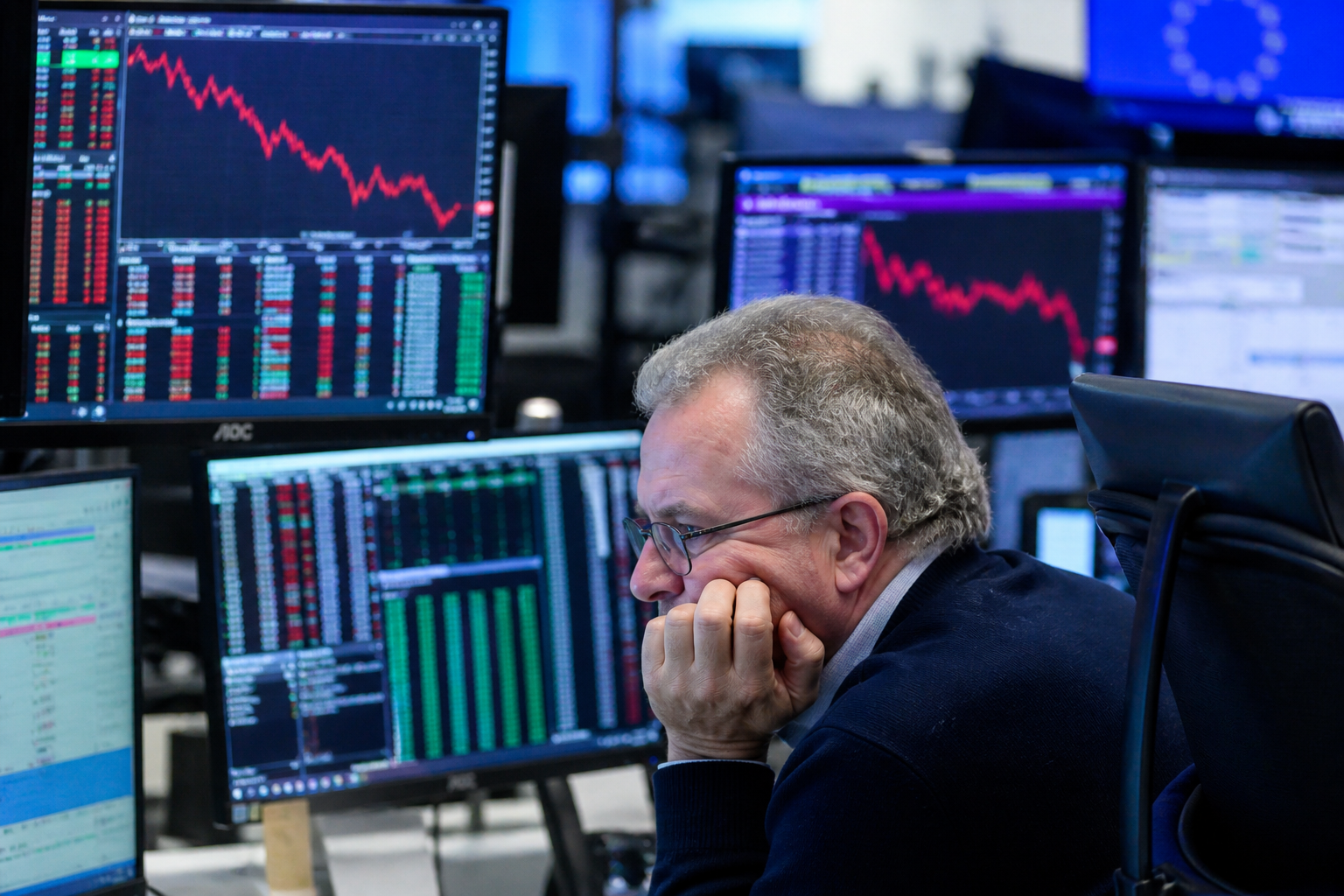
European shares moved slightly lower on Tuesday as investors remained cautious following fresh attacks involving the United States and Iran in Gulf waters.
Elevated global oil prices also added to market uncertainty.
The pan-European STOXX 600 index declined 0.1% to 604.68 points as of 0704 GMT.
The index had already recorded its steepest drop in a month during the previous session, reflecting heightened volatility in the region.
Major regional indices also traded in negative territory.
London’s FTSE 100 index fell by 1%, mirroring broader weakness across European markets.
Middle East escalation fuels market anxiety
Investor sentiment remained fragile amid rising geopolitical risks.
The latest escalation followed renewed attacks in Gulf waters involving the United States and Iran.
The tensions come after Donald Trump attempted to facilitate the passage of stranded vessels through the Strait of Hormuz.
This key shipping route connects the Gulf to global markets and typically carries oil and gas supplies equivalent to around 20% of daily global demand.
The developments have heightened concerns over potential disruptions to energy supplies, which in turn have driven oil prices higher.
Oil surge raises inflation concerns in Europe
Soaring oil prices have emerged as a major concern for energy-dependent European economies.
Higher energy costs are fuelling inflation fears across the region.
This has led market participants to anticipate further monetary tightening.
Expectations are now building for two to three interest rate hikes by the European Central Bank this year.
The prospect of tighter financial conditions has weighed on equities, pushing European shares below levels seen before the escalation of the conflict.
Trade tensions add to market pressure
Adding to the fragile sentiment, fresh trade tensions between the United States and the European Union further weighed on investor confidence.
US President Donald Trump said he plans to raise tariffs on cars and trucks imported from the European Union to 25%, escalating tensions between the two sides.
The move comes as Washington accuses the bloc of failing to comply with a previously agreed trade deal.
“I am pleased to announce that, based on the fact the European Union is not complying with our fully agreed to Trade Deal, next week I will be increasing Tariffs charged to the European Union for Cars and Trucks coming into the United States,” Trump said in a social media post, as reported by Reuters. “The Tariff will be increased to 25%.”
Several major European automakers, including Volkswagen AG, Mercedes-Benz Group AG and BMW AG, operate assembly plants in the United States, which could shield part of their production from the new tariffs.
The announcement marks a departure from an earlier transatlantic agreement under which the European Union had agreed to eliminate tariffs on US industrial goods in exchange for a 15% tariff ceiling on most EU exports.
HSBC slides on fraud-linked loss
Among individual stocks, shares of HSBC dropped 5.1% after the bank reported an unexpected $400 million loss tied to a fraud case in Britain.
The loss impacted the lender’s first-quarter performance, with profit coming in below market expectations.
The development added further pressure on the broader financial sector.
AB InBev gains on strong quarterly performance
In contrast, Anheuser-Busch InBev provided a bright spot for investors.
Shares of the Belgian beer maker rose 6.3% after it reported quarterly sales and profits that exceeded forecasts.
The strong earnings performance helped offset some of the broader market weakness, highlighting selective resilience among European companies despite ongoing macroeconomic and geopolitical challenges.
Overall, European markets remained under pressure as geopolitical tensions and rising oil prices continued to dominate investor sentiment.
The post European shares slip as US-Iran tensions escalate, oil stays elevated appeared first on Invezz