

Is Uber stock a buy after its bold $318M European expansion bet?
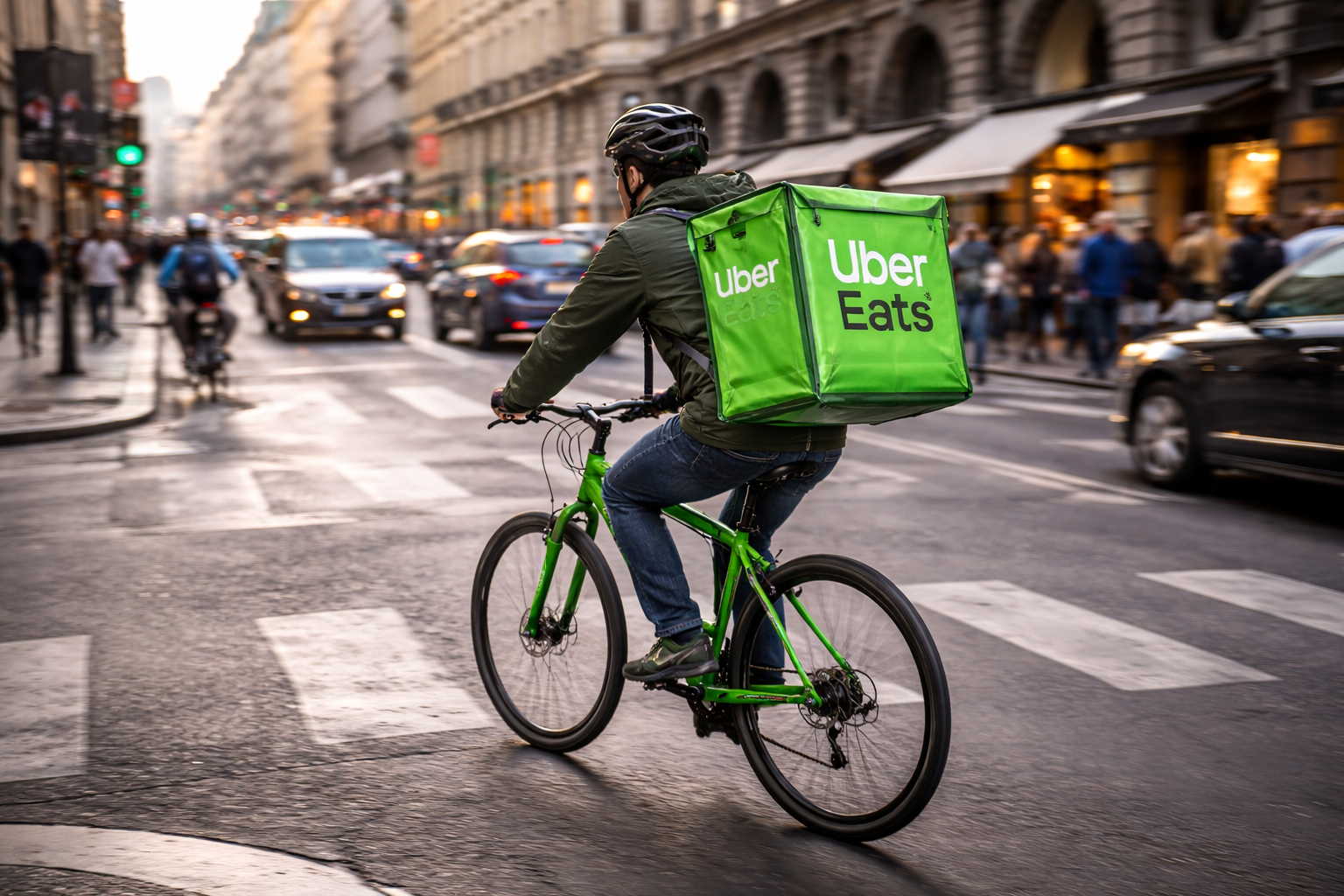
Uber has made a small deal with a big message for investors.
The company is buying a 4.5% stake in German food-delivery group Delivery Hero for about €270 million, or roughly $318 million, by acquiring 13.6 million shares from Prosus at €20 each.
The timing matters as Prosus is selling the stake to satisfy European Commission conditions tied to its Just Eat Takeaway transaction.
It means that Uber is stepping into a regulatory opening rather than launching an aggressive takeover bid.
That makes this less a splashy M&A play than a neatly timed strategic move in one of the world’s most competitive delivery markets.
Small stake, but loud strategic signal
In simple terms, Uber is not trying to buy Delivery Hero outright.
It is buying a minority position that gives it more exposure to Europe’s online food-delivery sector without the cost, scrutiny and complexity of a full acquisition.
That distinction matters as a 4.5% stake does not hand Uber control, but it does give the company a closer view of the action.
The investors supported the move as Delivery Hero shares rose about 3% after the news.
The deal looks more strategic than symbolic as Prosus needed to cut its holding for antitrust reasons, and Uber was in a position to buy.
For Uber, the attraction is obvious as Europe remains fragmented, competitive and ripe for reshaping.
Buying a relatively small stake is a lower-risk way to deepen its presence and keep strategic options open.
Why Europe matters more than the cheque size
The €270 million price tag is modest for a company of Uber’s size.
What gives the move weight is the broader backdrop.
In February, Uber said it planned to expand its food-delivery business into seven new European markets in 2026: the Czech Republic, Greece, Romania, Austria, Denmark, Finland and Norway, with a target of adding $1 billion in gross bookings over the next three years.
That makes the Delivery Hero stake look less like a stand-alone trade and more like part of a wider regional push.
Does this actually make Uber stock a buy?
The honest answer is that this deal helps the Uber bull case, but does not settle it.
Uber’s latest official results were strong: fourth-quarter 2025 trips rose 22% year over year, gross bookings also rose 22%, adjusted EBITDA climbed 35% to $2.5 billion, and free cash flow reached $2.8 billion.
Those numbers give investors reason to view a $318 million stake purchase as financially manageable and strategically credible rather than reckless.
Still, the stock story is more complicated than one Europe deal.
Uber stock closed at $76.48 on Thursday, well below its 52-week high of $101.99.
In February, the company also forecast first-quarter adjusted profit below analyst expectations, as cheaper rides and higher taxes weighed on margins.
More recently, Uber has committed more than $10 billion to its robotaxi strategy, highlighting that investors are also weighing heavier spending commitments and execution risk.
The post Is Uber stock a buy after its bold $318M European expansion bet? appeared first on Invezz