
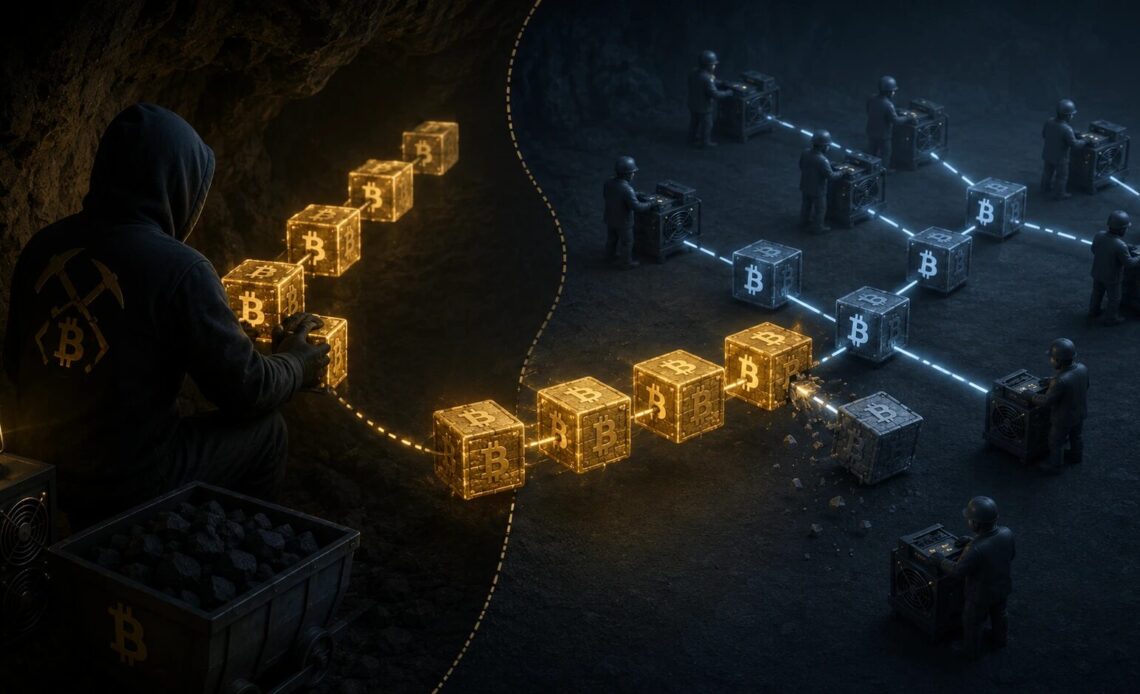
Shares of Bitdeer Technologies Group surged as much as 23% after the company announced a landmark $4.7 billion agreement to provide artificial intelligence and high-performance computing (AI/HPC) data center services from its Tydal campus in Norway.
The company said its wholly owned subsidiary, Tydal Data Center AS, signed a 16-year colocation and services agreement with Volta Tydal AS covering the full 121 megawatts (MW) of critical IT capacity at the campus. The contract is expected to generate approximately $4.7 billion in contracted payments over the initial term and includes an optional eight-year extension that could increase the total value to approximately $8 billion over 24 years. The announcement marks one of the largest AI infrastructure contracts ever signed by a publicly listed cryptocurrency miner and further reinforces the industry’s shift toward high-performance computing as traditional Bitcoin mining economics become more challenging.
Under the agreement, Volta will provide customer relationships, financing and technology partnerships, while Bitdeer will retain ownership of the Tydal campus and deliver the underlying colocation infrastructure. According to the companies, the facility will support a leading AI laboratory using NVIDIA GPU systems, with Dell Technologies serving as the technology provider. The end customer was not disclosed.
AI Infrastructure Becomes Bitdeer’s Growth Engine
The Tydal project represents a major evolution in Bitdeer’s business model. Originally known primarily as one of the world’s largest Bitcoin miners, the company has increasingly invested in AI cloud services, ASIC chip development and hyperscale data center infrastructure. The Norway campus, powered largely by renewable hydroelectric energy, positions Bitdeer to capitalize on surging global demand for AI computing capacity.
The agreement allocates the campus’s entire 121 MW of IT capacity, supported by approximately 133 MW of total power infrastructure. Bitdeer said construction and deployment will proceed under the long-term commercial framework established by the contract. The deal also validates the company’s strategy of leveraging expertise in power infrastructure and large-scale data center operations beyond cryptocurrency mining.
Investors have increasingly rewarded miners capable of securing AI-related contracts, viewing those businesses as less dependent on Bitcoin prices and post-halving mining economics.
Mining Industry Continues AI Pivot
Bitdeer’s announcement reflects a broader transformation across the publicly traded Bitcoin mining sector. Companies including Core Scientific, Hut 8 and several other miners have expanded into AI hosting and high-performance computing, seeking to monetize their existing power assets through long-term infrastructure contracts rather than relying exclusively on Bitcoin mining revenue.
Unlike mining income, which fluctuates with cryptocurrency prices and network difficulty, AI colocation agreements typically provide predictable contracted cash flows over many years. The market’s reaction underscores that shift in investor priorities. Bitdeer’s share price jumped approximately 23% after the announcement as investors focused on the scale and duration of the contracted revenue rather than near-term mining performance.
The agreement also highlights the growing convergence between the cryptocurrency and artificial intelligence industries. Data centers originally built to support energy-intensive Bitcoin mining are increasingly being repurposed to meet the exploding demand for AI computing, particularly facilities with access to abundant renewable electricity and scalable power infrastructure.
For Bitdeer, the Norway project represents its largest AI infrastructure commitment to date and signals that the company’s future may increasingly depend on hyperscale computing rather than cryptocurrency mining alone. As AI investment continues to accelerate globally, long-term contracts such as the Tydal agreement could fundamentally reshape how investors value digital infrastructure companies with roots in the crypto sector.