
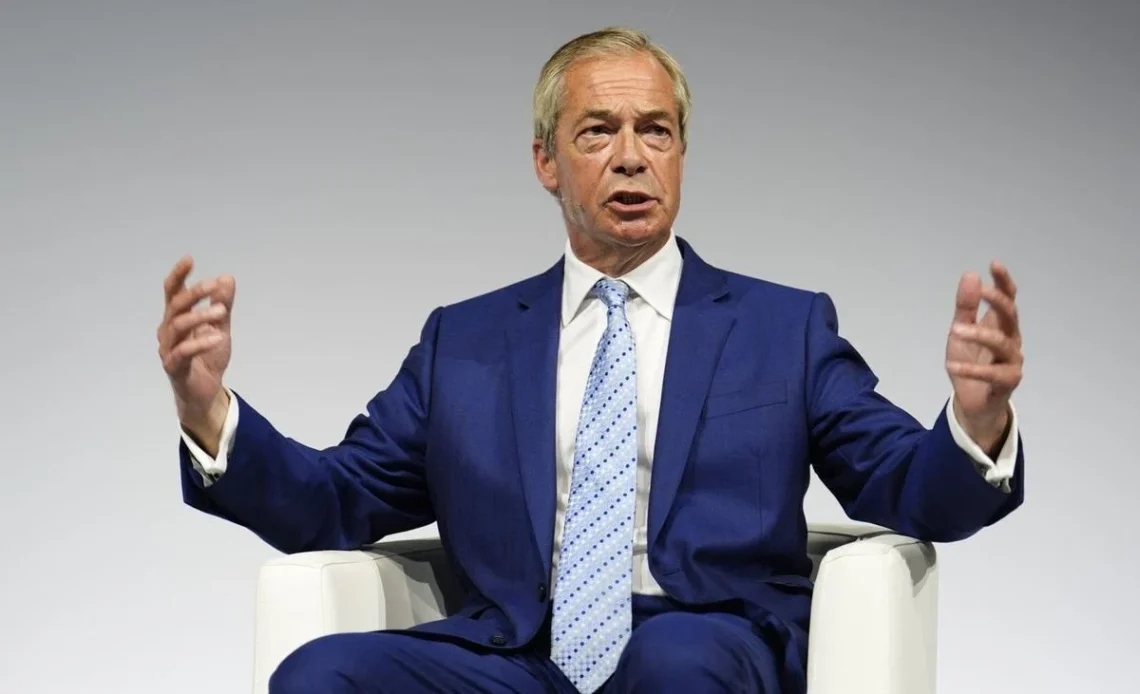
Why Is Nigel Farage Resigning From Parliament?
Nigel Farage, leader of the UK’s Reform party, said he will resign as the member of Parliament for Clacton and stand again in the by-election that could replace him, escalating a dispute over crypto-linked donations and gifts into a direct test with voters.
Farage said Tuesday that he would step down in response to what he described as “foul means” by established politicians. His announcement followed reports that he had personally received millions of dollars’ worth of donations and gifts from crypto billionaire Christopher Harborne and George Cottrell, a convicted fraudster linked to a crypto casino.
The move is unusual because Farage is not leaving politics. He is attempting to turn a standards controversy into an electoral mandate. By resigning and standing again, he is asking voters in Clacton to decide whether the reported gifts should affect his right to remain their representative.
“Let me be absolutely clear: I have done nothing wrong,” Farage said in an X livestream. “I have not broken the law in any way at all. I have not misused public money.”
What Are The Crypto Links Behind The Dispute?
The controversy centers on reported gifts from Harborne and Cottrell. Farage confirmed that he is the subject of 2 probes by the UK’s parliamentary standards commissioner following reports of what he called “gifts” from the two men, which he said were given “on an unconditional basis.”
Harborne is a crypto billionaire, while Cottrell has been linked to a crypto casino. Farage already had public ties to the digital asset sector before the latest reports. He spoke at the Bitcoin 2025 conference in Las Vegas and is an investor in Stack, a London-listed bitcoin treasury company.
When reports first circulated in May that Farage had received a $6.7 million gift from Harborne, he described it as a “reward” for campaigning for Brexit, the 2016 referendum that led to the UK’s exit from the European Union.
Farage said he would use Harborne’s gift for funding linked to his security, citing threats and attacks. He also framed the by-election as a way to put the issue before voters. “I’ve decided that the people of Clacton should be the judges of my actions,” he said. “I will be putting my name forward to stand in this by-election.”
Investor Takeaway
The Farage case shows how crypto-linked wealth is becoming a political risk factor, not only a campaign finance issue. For digital asset firms and investors, closer scrutiny of political donations could affect public perception, regulatory debate, and the sector’s access to policymakers.
Why Does This Matter For Crypto Politics?
The case comes as crypto money is playing a larger role in political campaigns and policy fights. In the UK, Farage has positioned himself as a pro-crypto political figure at a time when digital asset companies are seeking more favorable regulation, clearer tax treatment, and wider institutional acceptance.
That makes the source and structure of political funding more sensitive. Crypto-linked donations can strengthen ties between industry figures and politicians, but they can also create questions over influence, disclosure, and whether policy positions are being shaped by financial relationships rather than voter interests.
The standards probes do not determine whether Farage broke the law. They do, however, keep attention on the boundary between personal gifts, political support, campaign finance, and private-sector influence. For a sector trying to gain credibility with mainstream institutions, that distinction matters.
The by-election could take weeks or months because of the logistics required for Farage to step down and trigger the vote. He won Clacton in July 2024 with 46.2% of the vote against Conservative and Labour candidates, giving him a local base from which to defend his position.
How Could This Shape Broader Crypto Regulation?
The immediate impact is political rather than regulatory. Farage’s resignation does not change UK crypto rules, but it adds pressure to the wider debate over how digital asset wealth enters public life. If the controversy expands, lawmakers may face renewed calls for tighter disclosure standards around gifts, donations, and industry-linked support.
The issue is not limited to the UK. Crypto companies and wealthy industry figures are also expected to play a significant role in US races during the November midterm elections. A June report from consumer advocacy group Public Citizen said the crypto industry had spent about $189 million to support candidates viewed as favorable to digital asset policies in the 2026 election cycle.
US President Donald Trump has also faced criticism from lawmakers over 2025 financial disclosures that included $1.4 billion in earnings linked to crypto. Those figures have intensified questions over whether digital asset policy is becoming too closely tied to personal and political financial interests.
For investors, the larger signal is that crypto’s political influence is expanding faster than the public rules governing that influence. The Farage by-election may decide one parliamentary seat, but the controversy around it points to a broader risk: as crypto wealth becomes more active in politics, regulatory debates may increasingly be shaped by questions of transparency, conflicts, and public trust.