
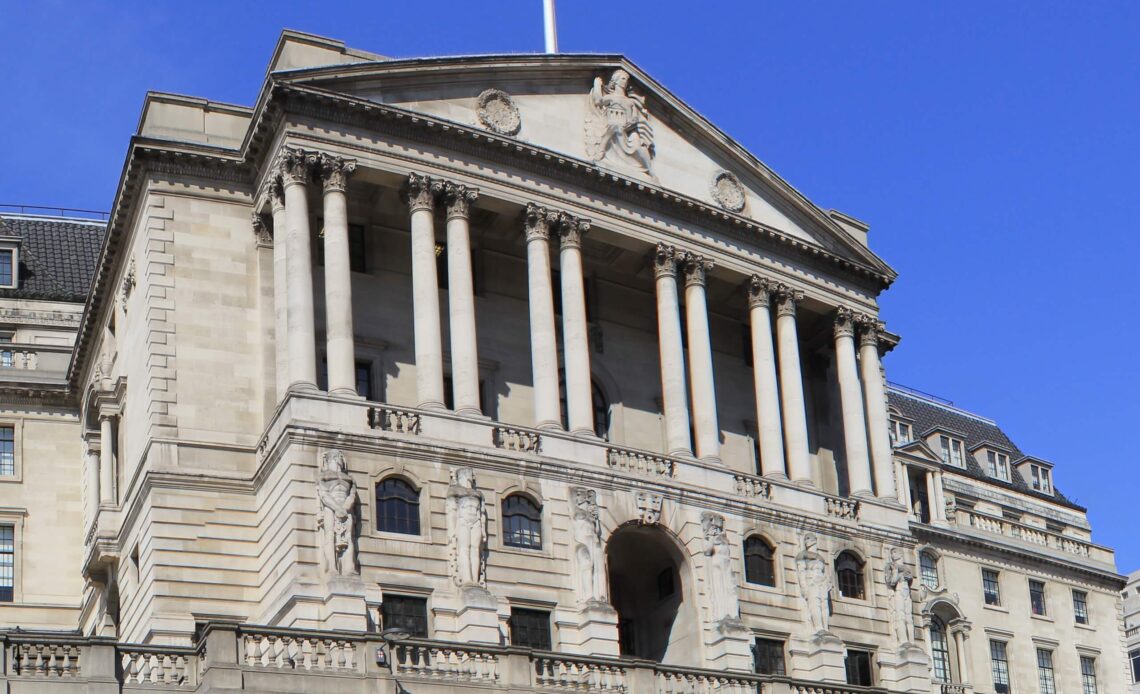
The Bank of England is expanding its digital currency experiments to cross-border payments, launching a test that will examine whether stablecoins and a potential digital pound can work together in the same international transaction. The experiment forms part of Phase 2 of the Bank’s Digital Pound Lab and brings together Polygon Labs, NOBO Finance and Dun & Bradstreet. The consortium will focus on trade finance for small and medium-sized businesses, using blockchain infrastructure to test whether international payments can become faster and more efficient.
The project is significant because it does not treat stablecoins and central bank digital currencies as competing payment systems. Instead, the Bank is testing whether privately issued digital money and central-bank money can perform different parts of the same transaction. However, the experiment remains entirely simulated. The Digital Pound Lab uses no real customers or money, and the Bank of England has still made no decision to issue a digital pound.
Stablecoins Could Fund Exporters Before Digital Pound Settlement
One of the test cases focuses on a persistent problem in international commerce: financing smaller exporters while they wait for overseas customers to pay. The consortium plans to test an invoice-factoring structure in which a UK or international exporter can receive an advance funded using stablecoins. The UK importer can subsequently settle the final obligation using a simulated digital pound. Polygon’s blockchain infrastructure will provide the public stablecoin component, while the Digital Pound Lab provides simulated central-bank money. A second part of the experiment will examine portable credit profiles for SMEs. NOBO Finance and Dun & Bradstreet plan to combine transaction history and business information into reusable credit identities, potentially allowing lenders to evaluate smaller companies more efficiently.
The broader objective is to reduce friction in trade finance, where smaller companies can struggle with expensive financing, fragmented documentation and lengthy international settlement processes. Blockchain could potentially combine financing, identity information and payment settlement within a more automated infrastructure. The Bank of England has previously estimated the broader opportunity around cross-border payments to be enormous. Deputy Governor Sarah Breeden cited estimates that global cross-border payment values could approach $290 trillion by 2030, while arguing that countries should make interoperability a priority as they modernize their domestic payment systems.
UK Is Building Stablecoin and CBDC Infrastructure in Parallel
The experiment arrives as Britain develops separate regulatory frameworks for stablecoins and central-bank digital money. In June, the Bank of England published its policy framework and draft rules for systemic sterling stablecoins, arguing that the technology could enable faster, cheaper and more flexible payments. The UK framework gives the Financial Conduct Authority responsibility for qualifying UK-issued stablecoins, while stablecoins considered systemically important would also fall under Bank of England supervision. The proposed CBDC would be a digital form of sterling issued directly by the Bank of England and intended for households and businesses. The Bank and HM Treasury are completing its design phase during 2026, but have repeatedly stressed that no decision has been made to launch it.
The latest experiment therefore points toward a potentially more complex future than simply choosing between CBDCs and stablecoins. Commercial banks could continue providing deposits, private companies could issue regulated stablecoins, and central banks could provide digital sovereign money. Interoperability would allow those forms of money to move between different networks without forcing the entire financial system onto a single payment rail.
That is what makes the cross-border test important. The Bank of England is not preparing to replace sterling with blockchain money. It is testing whether stablecoins, conventional financial infrastructure and a future digital pound could coexist—and settle against one another. If that architecture works, the bigger opportunity may ultimately be international. Cross-border payments remain slower and more expensive than domestic digital payments in many markets. Connecting blockchain-based private money with central-bank settlement could offer one route to changing that.