
Why Is Cuomo Promoting Tokenized Equities?
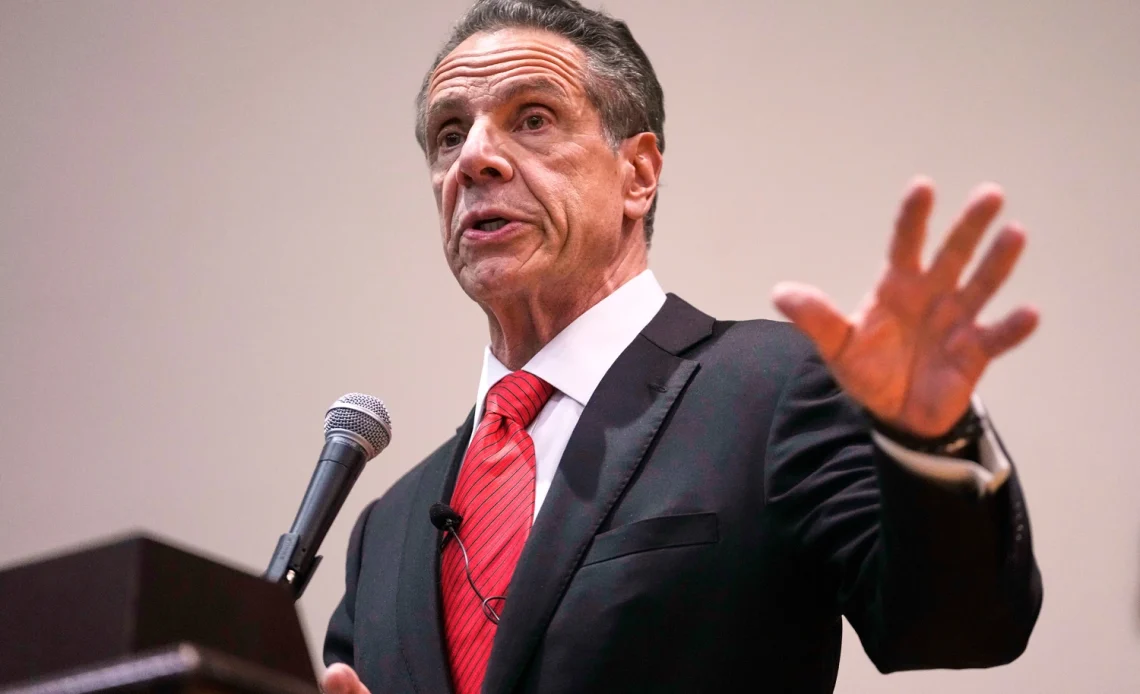
Former New York Gov. Andrew Cuomo has moved deeper into crypto market infrastructure, joining the board of OKX and publicly promoting the case for 24/7 tokenized stock trading.
Cuomo appeared on Fox Business on Monday after OKX announced his appointment to its board of directors. The move expands his existing role in the exchange’s U.S. expansion strategy. Last month, OKX and Intercontinental Exchange, the parent of the New York Stock Exchange, formed a 50-50 joint venture co-chaired by Cuomo.
The partnership places OKX inside a wider push to connect crypto infrastructure with traditional markets. The exchange is one of the world’s largest crypto trading platforms, though it remains behind Binance globally and faces a more competitive landscape in the U.S., where Coinbase dominates crypto trading.
“So crypto, OKX, fintech, coming together with ICE [and the] New York Stock Exchange — that is a marriage that should have happened a long time ago,” Cuomo told Fox Business. “When people talk about crypto, they tend to talk about tokens, etc. That’s not how I see crypto. I see it as the financial infrastructure of the future.”
What Is The Market Opportunity?
Cuomo framed tokenized equities as a way to expand access to U.S. markets beyond traditional exchange hours and domestic investor channels. His argument centers on the idea that onchain securities could allow investors outside the U.S. to buy exposure to American stocks around the clock.
“Just imagine a world … where you can trade stocks 24/7 internationally,” he said. “Literally trillions of dollars internationally could be invested into the U.S. economy, into our exchanges.”
That pitch comes as tokenized equities attract more attention from both crypto firms and traditional financial companies. The appeal is clear: U.S. stocks remain among the world’s most liquid and widely followed assets, while blockchain-based platforms promise faster settlement, fractional access and global distribution.
For OKX, the opportunity is also strategic. The exchange has historically focused on international markets, but it is now seeking a larger role in the U.S. market. Partnering with ICE gives the company a link to one of the most established institutions in global market structure, while Cuomo adds political and regulatory experience at a time when digital-asset firms are trying to build credibility with policymakers.
Investor Takeaway
The OKX-ICE partnership shows how tokenized equities are moving from a crypto-native experiment toward a market-structure debate. The key question is whether 24/7 stock exposure can fit inside existing securities rules without creating new liquidity, custody and investor-protection risks.
How Could Tokenization Change Stock Trading?
Cuomo said tokenization could change how investors access equities by allowing fractional ownership and faster digital transactions.
“Tokenization says you can have fractional ownership. You can have a digital representation of that asset,” Cuomo said. “So you can buy a tenth of one stock, you can buy half of one stock, and the transactions digitally are immediate.”
The model differs from traditional stock trading, where market access is tied to exchange hours, brokerage systems, clearing cycles and national market rules. Tokenized stocks attempt to represent equity exposure on blockchain rails, potentially allowing trading outside standard market sessions and across more jurisdictions.
That structure could broaden access, but it also raises questions for regulators and market participants. Tokenized equities must address how ownership is recorded, how corporate actions are handled, how liquidity is supported outside regular market hours and whether investors are buying the stock itself or a token linked to its economic value.
Those distinctions matter for institutions. Asset managers, brokers and exchanges are unlikely to treat tokenized stocks as a simple crypto product if the tokens represent exposure to regulated securities. The closer these products move toward mainstream markets, the more they will face scrutiny over custody, disclosures, market manipulation controls and investor eligibility.
Why Are Crypto Firms Targeting U.S. Stocks?
Onchain stock trading has become a growing focus across the crypto industry as digital-asset companies look for ways to connect blockchain infrastructure with traditional assets. Robinhood offers European customers tokens tied to hundreds of U.S. stocks and ETFs, while Backpack has launched 24/7 trading in tokenized shares.
The push reflects a broader shift in crypto business models. After years of focusing mainly on native tokens, exchanges and fintech platforms are trying to bring real-world financial assets onchain. U.S. equities are a natural target because they combine global demand, deep liquidity and strong brand recognition among retail and institutional investors.
Cuomo’s involvement also points to the political layer behind the sector’s expansion. His public support for crypto dates back at least to last year, when his New York City mayoral campaign proposed creating a chief innovation officer to support the city’s adoption of blockchain and artificial intelligence.
The challenge now is execution. Tokenized stock trading may offer longer market access and fractional exposure, but its growth depends on whether firms can satisfy regulators, protect investors and prove that blockchain rails add value beyond existing brokerage infrastructure. For OKX, the board appointment and ICE partnership give the company a stronger institutional story as it tries to expand in the U.S. market.